US & Israel attack Iran again
Created Tuesday 03 March 2026
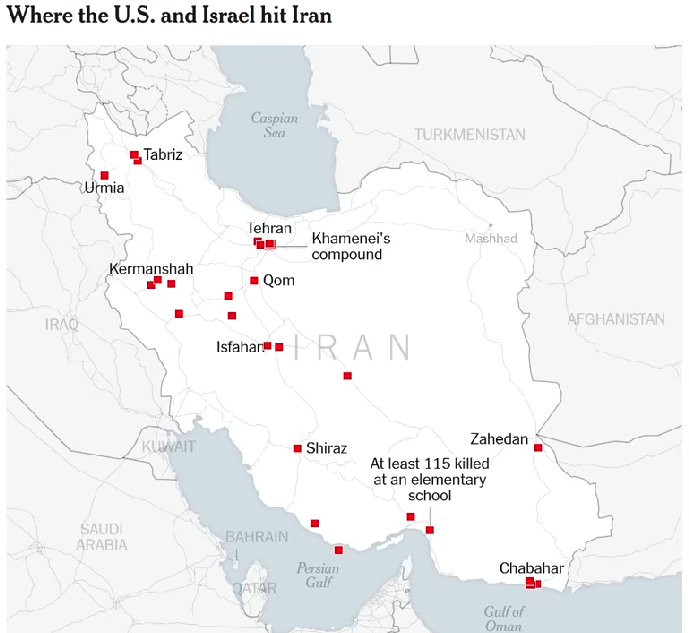
The US and Israel just started another illegal war in the Middle East at the weekend. And let’s be real, there is no credible evidence that Iran has or is near to having nuclear weapons. Anything suggesting this is pro-war propaganda targeted at western audiences. The real goal, first, is propping up Israel hegemony in the region. And, second, re-incorporating Iran’s resources, oil, into Globalisation 2.0's global economic circuits. In other words, out of China’s hands.
Initially, it looked like the goal of the strikes was the collapse of the Iranian state. US officials have openly discussed long-term plans aimed at decapitating the Iranian regime. Then, presumably, they would flood Iran with cash and weapons to fuel internal factions and chaos. While that would probably serve those goals, you would think the US had learned something after decades of failed interventions in the region.
Two other factors probably convinced US planners that the risk was worth taking. First, instability in the Middle East is usually profitable for Western capital. And if there’s one thing Trump and the people around him like, it’s making money. Second, Trump’s vanity.
Trita Parsi of the Quincy Institute offers some insight here. He argues that Israel tapped into Trump’s vanity by convincing him Iran was weak and could be taken down quickly. That does not appear to be true. As a result, we may eventually see US troops inside Iran, especially if the Iranian state refuses to back down until the costs become too high for Washington and its allies.
Parsi also notes that the peace talks, from the US side, were always about Iran surrendering unconditionally, not a new nuclear deal. The idea that the US was a bad faith actor in the negotiation is untrue. Propaganda from Israel; as they do not like the US negotiating with their enemies. This is one way to stop future negotiations.
Overall, this conflict looks likely to continue escalating. Trump’s planned meeting in China next month could potentially help de-escalate tensions, but that remains uncertain.
Carney on Iran – Liberal Hypocrisy on Full Display
One of the more interesting aspects of the Western response has been how little resistance there has been to the attack on Iran.
This stands in contrast to the position Mark Carney, the Canadian prime minister, took at Davos only a few weeks ago. At the time, he criticised Trump for dismantling the so-called rules-based order. Carney argued that, while the system may have been based on liberal fictions, it was still functional.
Adam Tooze wrote about this dynamic back in January. He described a growing rupture between the US and the rest of the West during Davos, driven by Trump officials aggressively pushing deals and making demands like the acquisition of Greenland.
At the time, I saw this less as a rupture and more as a transition. The Trump administration appears to be building on top of the neoliberal order rather than completely replacing it. That older order — and elite consensus around it — has already been weakening since the 2008 global financial crisis.
Looking at Carney’s comments on Iran now, it seems clearer that there is no real break between the US and its allies. Instead, a new consensus is emerging around how this transition should proceed.
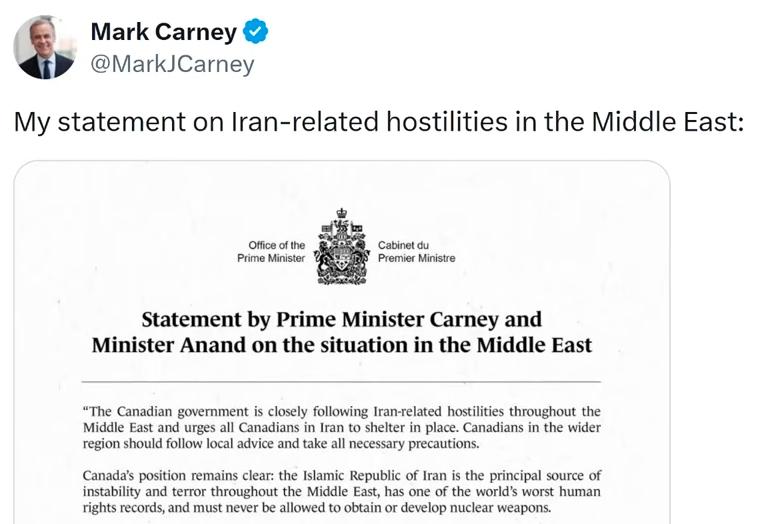
Ben Norton reaches a similar conclusion. The hypocrisy of Western leaders is obvious in the way figures like Carney ultimately fall in line behind Trump’s new imperial posture. In practice, this means accepting Marco Rubio’s invitation at the Munich conference for Europe to align itself more closely with US geopolitical strategy. Though, they will have to start paying for US military assistance, the post WWII free ride is clearly coming to an end.
The reality is that most Western allies still depend heavily on the United States. For one thing, they lack the military capability to operate independently if the US pulls back. They are also heavily reliant on American technological dominance because their own tech sectors remain comparatively weak.
European liberal states are already moving toward a mode of governance that resembles the US model. That includes deeper regional financialisation (Globalisation 2.0), illiberal surveillance systems and growing militarisation. These trends are being driven not only by the US itself, but also by broader post-2008 pressures. These include increased state economic intervention, economic stagnation, and the rise of far-right politics fuelled by immigration fears across Europe.