Created Friday 03 April 2026
I have previoulsy wrote about Trumps evolving drug war in Latin America. Now WOLA has published an update on trends in South America, with particular attention to Ecuador.
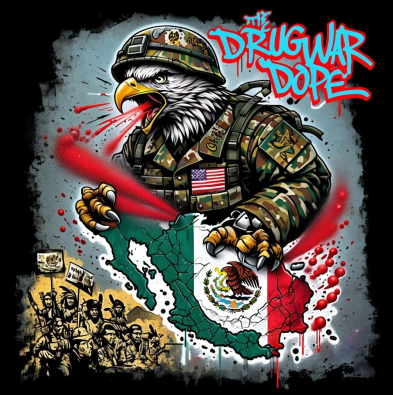
The Trump administration prefers direct drug interdiction over traditional aid, training, and intelligence sharing. Mexico has been under significant U.S. pressure to adopt this model. So far, however, it has only been implemented in Ecuador.
The WOLA report highlights what this looks like in practice. It notes a shift, as described by U.S. Southern Command’s online magazine, “toward ‘joint targeting’ efforts where U.S. technical expertise supports Ecuadorian Special Forces in precision raids.”
Yet resistance to this kind of military action persists. The main reason is that U.S. actions in Latin America often evoke memories of bloody imperial machinations in the 19th and 20th centuries.
One strategy to counter such resistance is to label cartels as narco-terrorists. This paints them as a direct threat to the state. That characterization is a fallacy, but it is one that permeates liberal academia and journalism, eventually filtering into mainstream thought.
The narco-terrorist label makes it easier to justify U.S. actions in the region. This justification works both for an Trump's isolationist base, MAGA, in the United States and for Latin American populations suffering increasing violence.
It is therefore no surprise that the U.S. narco-terrorist designation in South America is expanding. As WOLA notes, the list has grown from four to 19 since 2025. Two more Brazilian groups are expected to be added soon. All of this is in preparation for the rollout of a more muscular drug war.